

How the new Plaid Cymru Government could end homelessness in Wales
By Thomas Lavery, Policy and Public Affairs Coordinator
After 27 years of Labour-led Welsh Governments, we have a new Government led by Plaid Cymru. May’s Senedd elections saw 43 Plaid Cymru members elected to the Welsh Parliament, and leader Rhun ap Iorwerth has been chosen as First Minister.
The Plaid Cymru cabinet has been announced, and Sian Gwenllian, Member of Senedd (MS) for Gwynedd Maldwyn, has been appointed Cabinet Minister for Local Government, Housing and Planning.
The Welsh housing sector is now looking for signs that this change of leadership might lead to a significant step-change in our efforts to end homelessness across Wales.
What Plaid Cymru can do
The previous government developed an Ending Homelessness Action Plan for 2021-26. This included many positive actions, but there has not been a public update on progress public update on progress since 2023.
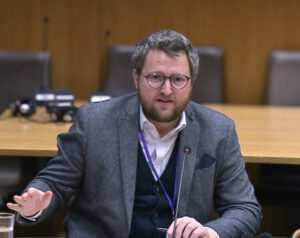
Sian Gwenllian and her officials need to set out exactly how much progress has been made on these actions. And then recommit to a refreshed plan for the next four years, including clear targets and milestones that we can use to judge progress.
Plaid Cymru do not have an overall majority in the Senedd, so they will need to rely on politicians in other parties in order to pass legislation and their annual budgets. But there is plenty the government can do without passing new laws.
They can speed up implementing the new Homelessness Act to provide better services to people who need them right now. They can also carry out the recommendations of the Ending Homelessness National Advisory Board, including on rapid rehousing, and on pay and conditions for the housing support workforce.
The whole housing and homelessness sector agrees and is ready to make these changes happen, with clear direction and leadership from Welsh Government.
Before the election, Plaid Cymru set out a lot of detail about what they wanted to do on housing if they were in government, in their manifesto and in their plan for their first 100 days.
The party said that one of the first things they would do would be to establish ‘Unnos’ – a national development body to support local authorities and housing associations to finance and build more social housing. They also committed to outline proposals to make renting fairer, and to begin legislative work for a human right to adequate housing.
These are both areas of work supported by Welsh organisations, including The Wallich. In a recent Welsh Government consultation, there was agreement across parties and sectors on the need to embed the right to housing in Welsh law.
What The Wallich wants
The Wallich is the largest third sector provider of homelessness and housing support services in Wales. We work with more than 7,000 people every year to prevent and alleviate homelessness, creating hope for a brighter future. We know what needs to be done.
Previous Welsh Governments consulted extensively with industry experts to understand how we make homelessness rare, brief and unrepeated. But the wheels of government move very slowly. While lots of good work has happened and should continue, we clearly need to renew focus.
Before the election, The Wallich published our own Manifesto outlining key priorities for the next Welsh Government. The Government needs to:
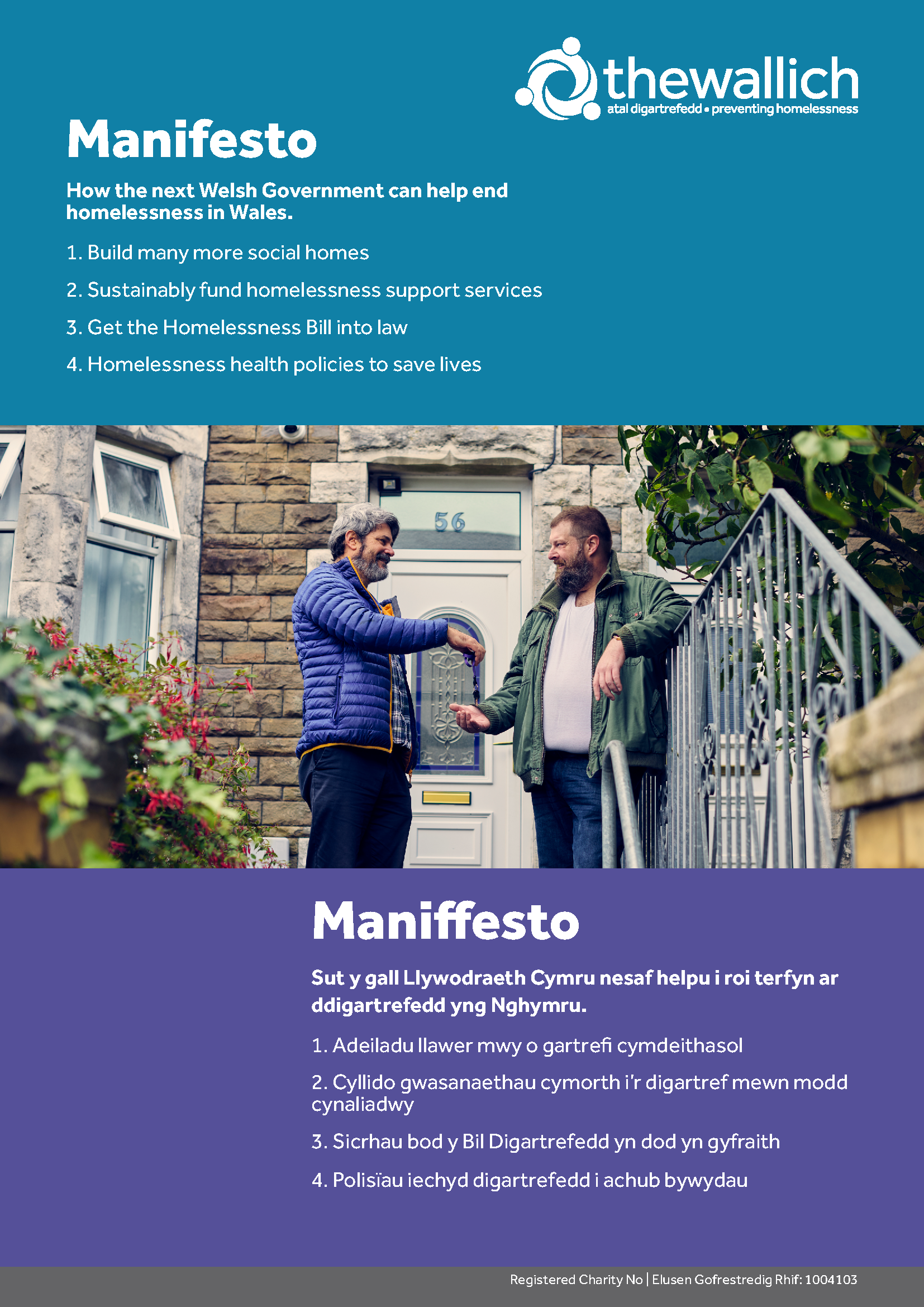
Speed up the social housebuilding programme across Wales and make sure that the total number of social homes (as well as the percentage) increases year on year.
Refit the estimated 103,000 empty or under-occupied homes to meet the needs of local communities. Wales currently has the lowest quality housing stock in the UK.
Commit to sustainably funding housing support services for the long term. These services are expensive to deliver, but this preventative work saves significant future costs to other public services such as health, social services, and criminal justice.
Fully enact the recently-passed Homelessness and Social Housing Allocations (Wales) Act 2026 as soon as possible. This wide-ranging bill not only extends the homelessness prevention duty from 58 days to 6 months, it also creates a duty on all public services to cooperate in identifying and supporting people at risk or experiencing homelessness. It’s good policy, supported across the sector. The wheel does not need to be reinvented on this, it just needs to start rolling.
Radically improve access to physical and mental health services and prioritise a harm-reduction approach to drug and alcohol use. Many services are currently inaccessible, so there must be no wrong door when people take the brave decision to ask for help.
No time to waste
From conversations with Plaid Cymru candidates before the election, there is a sense that there are those within the party who understand the scale of the challenge and what is needed to address it, but the new Cabinet Minister cannot afford to waste any time.
There is real ambition to finally end homelessness in Wales. With more than 10,000 people in temporary accommodation (including over 2,000 children), and more than 150 people sleeping rough, this has never been more urgent.
The action needed will of course be very expensive for a new Government facing huge challenges across the whole range of policy areas, but the financial and human costs of failing to meet the scale of the challenge will be even higher.
There’s quiet hope amongst the people of Wales for positive change on housing. So the new Welsh Government can expect a relentless focus from our sector to make sure housing and homelessness do not fall off the radar.